Maui Whale Watching January: A Peak Season Guide
January sits right in the heart of humpback season on Maui. The AuAu Channel between Kihei, Lahaina, and Lanai fills with thousands of whales, and the action stays close enough to shore that you can often watch it from a chair with a cup of coffee in hand.
Why January Is the Sweet Spot
Humpbacks start arriving in Hawaii around November, but the population builds through December and hits serious numbers by early January. By mid-month, the AuAu Channel is one of the most reliably whale-dense stretches of ocean on earth. Roughly two thirds of the North Pacific humpback population winters in Hawaiian waters, and a large share of them settle into this exact channel.
January also brings the behavior people actually want to see. It is not just distant blows and the occasional tail. This is when competition pods form, when males sing audibly through a boat hull, and when full breaches become a routine part of an afternoon rather than a lucky break. The whales are here to mate and give birth, not to feed, so they have nothing else to do but put on a show.
Water and air temperatures are cooler than summer but still very comfortable. Expect daytime highs near 80°F in Kihei, water around 76°F, and trade winds that keep the shoreline pleasant. It is one of the best months of the year to be outside on the south side of the island.
Where the Whales Actually Are
The AuAu Channel is the main stage. It runs between West Maui and Lanai, and the southwest shoreline of Maui -- Maalaea, Kihei, Wailea, and Makena -- all look out onto it. Water depths here drop off quickly, which is why whales can be seen so close to shore.
Beyond the channel, three other areas matter. Maalaea Bay on the north end of South Maui is a known calving and resting zone. The Pali along the west coast offers cliff-top views straight down onto whales. And the Molokai channel crossing toward Lanai puts you in open water where pods tend to be larger and more active.
What most visitors do not realize is how much of this is visible from land. From an oceanfront lanai on the seventh floor at O Thank Heaven 4 711, the reef line sits directly below, and the whales work the deeper water a few hundred yards out. On a clear January morning you can count blows without standing up.
How to Watch from Shore (and Why It Works)
Shore-based whale watching in January is genuinely productive, not a consolation prize. The trick is elevation and a wide field of view. A seventh-floor perch looking west gives you a horizon-to-reef scan, which is exactly what you need to catch distant spouts before they turn into something bigger.
A few practical habits help:
- Scan slowly. Whales surface in patterns, so pick a section of ocean and watch it for a full two or three minutes before moving on.
- Keep binoculars within reach. You will see far more blows with glass than with eyes alone, and a breach at 800 yards is still spectacular magnified.
- Watch for the "footprint." A slick, flat patch of water left by a diving whale marks where it went down -- and roughly where it will come back up.
- Bring a layer. January mornings on a west-facing lanai can be breezy before the sun clears the building.
The 35-foot lanai at unit 711 faces west, which means it looks straight into the afternoon sun path across the channel. That backlighting is beautiful for photos but hard on contrast, so if you want to shoot whales, aim for the morning hours when light comes over your shoulder. Details on what to pack for this are in our Maui packing list.
Whale season, viewed from your own lanai
Unit 711 at 3559 Lower Honoapiilani Rd #11 sits on the seventh floor, facing west over the reef and straight into the AuAu Channel. In January, the show starts before you finish your coffee.
Check availabilityBoat Tours: What to Book and When
If you want to be on the water in January, book early. Peak season departures from Maalaea Harbor -- just fifteen minutes north of Kihei -- fill up weeks in advance, and the best time slots go first. Sunrise and mid-morning trips tend to have calmer seas; the trade winds usually build by early afternoon.
Two practical notes. First, whale watching boats must stay a regulated distance from the animals, so choose a smaller vessel or a raft-style tour if you want closer, more personal encounters. Second, if you are prone to seasickness, January swell can be real in the channel, and a morning departure on a larger catamaran is usually the gentler option.
Trips typically run two hours, and a good operator will get you onto multiple pods. You do not need to book a specialty "guaranteed whale" tour -- by January, every operator in Maalaea is finding whales.
Whales, Turtles, and the Rest of the Reef
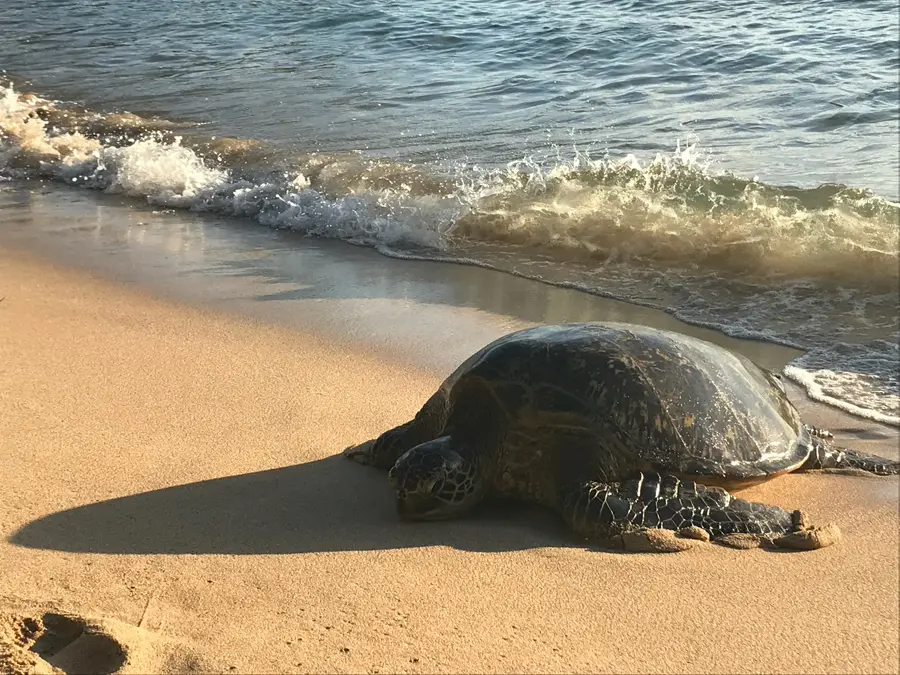
One thing that makes a Kihei January stay unusual is that the whale action overlaps with everything else. The same reef below the condo holds Hawaiian green sea turtles year round, and they are easy to spot from above before you ever get in the water. Snorkeling straight off the lawn means you can do a morning reef swim and then dry off on the lanai and watch whales in the same hour.
If you want to combine both, our guide to snorkeling spots near Kihei covers the shoreline entries closest to this stretch of South Maui. For a deeper background on the animals themselves, the complete humpback season guide walks through migration timing and behavior month by month.
Timing Your January Visit
If your dates are flexible, the second and third weeks of January tend to be the most active for surface behavior, and they sit just past the holiday rush. Flights and rentals are easier to find, and the channel is fully populated.
Plan around the light. Whale watching from shore is best from roughly 7 to 10 a.m., when the sun is behind you and the water has not yet picked up afternoon chop. Boat trips are best in that same window. Afternoons are for the reef, the beach, and simply sitting on the lanai watching spouts break the horizon while the sun drops toward Lanai.
January is not a quiet month on Maui, and that is the point. It is the month when the ocean in front of South Maui is at its most alive, and when the simplest possible plan -- a chair, a view, and a little patience -- pays off again and again. When you are ready to lock in dates, check availability at the condo and plan your mornings around the whales.