Where to See Hawaiian Green Sea Turtles (Honu) in Maui
The Hawaiian green sea turtle -- honu -- is one of the oldest animals on earth, a species that has existed for 150 million years. In Maui, they rest on beaches and feed on reef algae close enough to shore that an unhurried visitor will almost certainly encounter them. Here is where to look, how close to get, and why the rules protecting them exist.
Right at Maui Sands Seaside
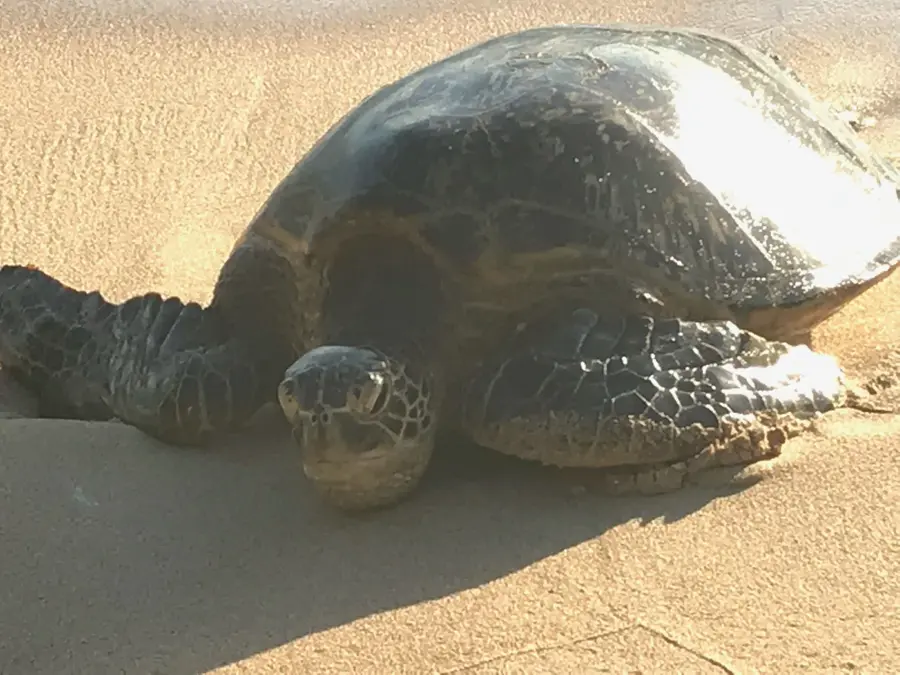
Honu regularly haul out on the shoreline at Maui Sands Seaside. They use the rocky and sandy sections at the water's edge to rest and warm in the sun -- a behavior called basking. Guests at unit 711 have photographed them from the lanai and encountered them while walking the shoreline. This is not a guaranteed daily event, but it is a consistent and regular occurrence, particularly in the early morning and late afternoon.
When a honu is resting on shore, the right response is to observe from at least ten feet away and let it rest. Do not approach, do not touch, do not position yourself between the turtle and the ocean.
Turtle Town (Maluaka Beach, Makena)
The stretch of water off Maluaka Beach in Makena has earned the unofficial name Turtle Town because honu consistently feed on the coral heads here throughout the day. Shore entry from the beach is easy. The water is calm inside the bay, visibility is typically good, and you can follow the turtles as they graze on algae at a comfortable, legal distance. This is the most reliable in-water turtle encounter site in South Maui. About fifteen minutes south of Maui Sands Seaside.
Black Rock at Ka'anapali (West Maui)
The volcanic promontory at the north end of Ka'anapali Beach on the west coast is another reliable honu spot. Turtles feed on the algae growing on the lava rock and rest on sandy patches at the base. The snorkeling here is accessible from shore and the turtles are accustomed to swimmers. Go in the morning before the daily snorkel tour boats arrive and claim the water.
Ulua Beach (Wailea)
The rocky point shared between Ulua and Mokapu beaches in Wailea is a feeding ground for honu who work the coral ledges. The visibility here is consistently good and the turtles are present most days. The best encounters are in the first hour of the morning, before the beach fills with resort guests from the adjacent hotels.
Honu rest on the shore below the unit
Guests at unit 711 regularly see Hawaiian green sea turtles from the lanai and along the shoreline. From the water, the reef below the unit is active feeding habitat. No boat required.
Check availabilityAhihi-Kinau Natural Area Reserve
The protected marine reserve at Ahihi-Kinau, about fifteen minutes south of Kihei, has high turtle activity because fishing is prohibited and the reef is less impacted. Turtles feed on the abundant algae and rest on the sandy patches between lava formations. Entry to the reserve requires careful footwear due to the sharp lava. Check DLNR for current timed-entry rules.
The Rules and Why They Matter
Hawaiian green sea turtles are protected under the Endangered Species Act and the State of Hawaii's marine turtle protection statutes. The key rules for visitors:
- Stay at least ten feet away from any honu, whether on land or in the water.
- Do not touch a turtle. Bacteria from human hands can cause infections in turtles whose immune systems are not adapted to human pathogens.
- Do not position yourself between a resting turtle and the ocean, which can block its escape route and cause it to exert itself unnecessarily.
- Do not enter the water directly in front of a resting honu to cause it to swim away.
- Do not feed turtles. They know where the algae is.
Fines for harassment can reach $100,000. More importantly, honu population numbers -- while recovering -- are still vulnerable. The difference between respectful wildlife watching and harassment often comes down to a few feet and a few seconds of patience.
The Best Time of Day
Early morning (7 to 9 a.m.) is when turtle activity is highest at feeding sites. Resting honu come ashore most often in the late morning and early afternoon to warm up. The late afternoon (4 to 6 p.m.) sees them feeding again before dark. Any time in the water at an active reef is a reasonable bet for an encounter; the morning window is simply the most consistent.