Humpback Whale Watching Season in Maui: Everything to Know
Every winter, North Pacific humpback whales make the longest mammal migration on earth -- from their Alaskan feeding grounds to the warm, shallow waters of the Hawaiian islands. Maui sits at the center of their breeding ground. From the right lanai, you do not need a boat.
When Do Humpback Whales Arrive in Maui?
The first humpbacks typically appear in the Maui Nui basin -- the protected water between Maui, Molokini, Kaho'olawe, Lana'i, and Moloka'i -- in late November. Numbers build through December and peak in January and February. By mid-March, most adults have begun their return to Alaska, though mothers with newborn calves often stay through April, moving slowly along the coast while the calves build strength for the migration.
The calendar depends on the year. Some seasons bring early arrivals in October. Others run late. The mid-December through late February window is the most reliable for consistent sightings.
Why the Maui Nui Basin?
The shallow channel between Maui's western coast and the neighboring islands creates water temperatures and depths ideal for breeding and nursing. Humpbacks do not feed during their Hawaii stay -- they live off fat reserves built up in Alaska. The channel depth averages around 300 feet, shallow enough for calves but deep enough for adults. The basin is one of the densest concentrations of humpback whales in the world during peak season.
The Auau Channel, which runs between Maui and Lana'i directly in front of the west Maui coast, is particularly active. It is the channel you are looking at from the unit 711 lanai.
Watching from Shore
Shore watching on the west coast of Maui is genuinely productive. The whales pass remarkably close to shore, especially along the stretch between Maalaea and Makena. From a second- or third-floor oceanfront position, you have the elevation to see the white foam of a blow before the whale surfaces fully. Binoculars help, but breaches -- where a whale launches its full body out of the water -- are visible with the naked eye.
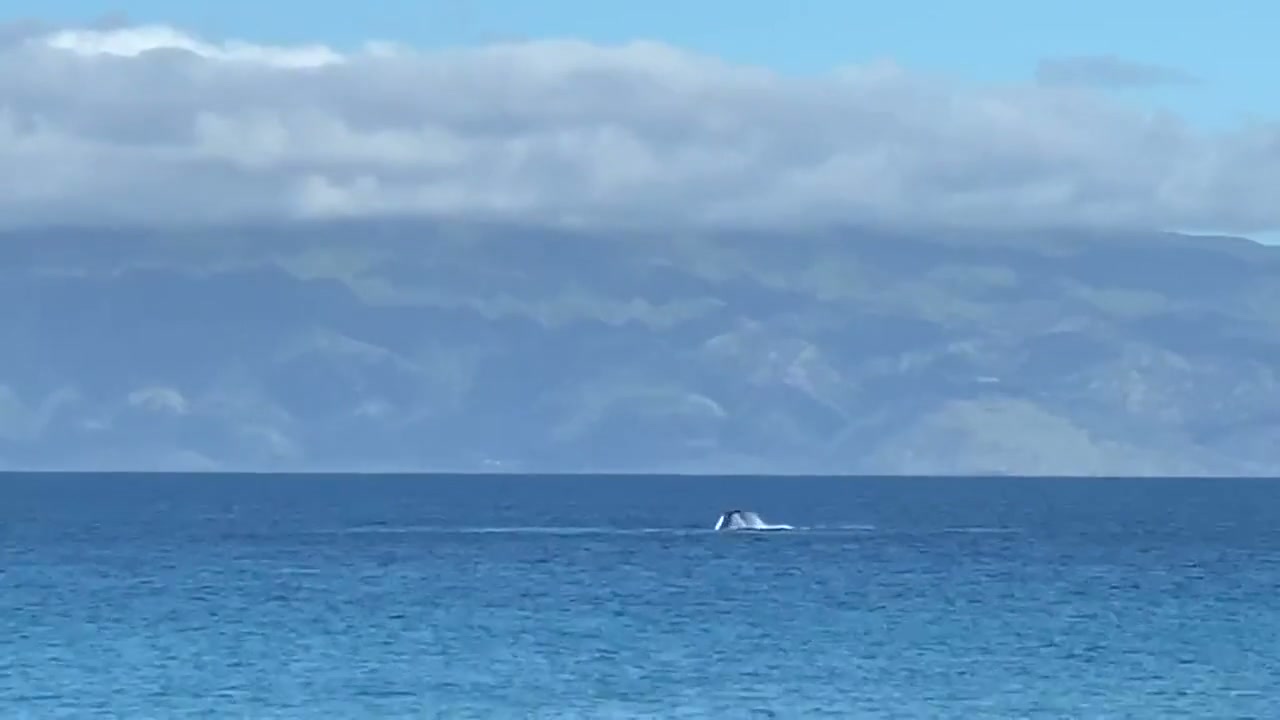
At unit 711, guests have filmed humpbacks directly from the lanai. The whale video on the homepage was shot from there. The best viewing times are morning, when the water surface is glassy and blows are easiest to spot.
Whale Watch Boat Tours
A guided whale watch is worth doing at least once. Being on the water dramatically changes the experience -- you hear the blows, you feel the spray, and the scale becomes real in a way no shore sighting replicates. Tours depart from Lahaina Harbor (west Maui) and Maalaea Harbor (central Maui). Most runs are two hours. Pacific Whale Foundation offers narrated educational tours. Trilogy and PacWhale Eco-Adventures are also reputable operators. Book in advance during January and February; tours sell out.
Watch whales from your couch
Unit 711 faces the Auau Channel -- the heart of humpback territory. In peak season, you may not even need to leave the lanai. Thirty-five feet of private west-facing ocean view.
Check availabilityWhat Behaviors to Watch For
Humpbacks in the breeding ground are active. Here is what you might see from shore or a boat:
- Blow: The spout of vapor when the whale exhales. The bushy, heart-shaped blow of a humpback is distinctive and visible from a distance.
- Fluke: The tail lifted before a deep dive. A great sign that the whale will surface again nearby in three to eight minutes.
- Breach: Full or partial body launch out of the water. Loud, dramatic, and worth waiting for.
- Pec slap: Slapping the long pectoral fin on the surface. Usually a display behavior.
- Spy hop: Rising vertically out of the water to look around. Slower and more deliberate than a breach.
- Singer: Male humpbacks sing complex songs. If you are in the water and a whale is nearby, you may hear it through the surface.
Staying Legal and Respectful
Federal law under the Marine Mammal Protection Act prohibits approaching within 100 yards of a humpback whale by vessel. Approaching within 1,000 yards of a mother-calf pair is also restricted. If you are on a kayak or paddleboard and a whale surfaces nearby, stop and let it pass. Do not paddle toward it. On shore, there are no restrictions on watching, but do not enter the water to swim toward surfacing whales.